Elmhurst homeowners are discovering that smart remodeling projects do more than refresh tired spaces, they unlock genuine equity, improve daily livability, and adapt homes to modern living standards. Whether you’re planning a kitchen overhaul, bathroom upgrade, or whole-home renovation, the decisions you make now affect both your home’s resale value and how enjoyably you live in it. This guide walks you through the current remodeling landscape in Elmhurst, from trending upgrades to contractor selection, with practical steps to keep your project on track and within budget.
Table of Contents
ToggleKey Takeaways
- Home remodeling in Elmhurst unlocks genuine equity, improves livability, and adapts homes to modern living standards while addressing structural and systems issues common in the area.
- Kitchen remodels deliver the highest ROI in Elmhurst, with current trends emphasizing functional layouts, warm neutral cabinetry, quartz countertops, and energy-efficient induction cooktops.
- Bathroom renovations return 50–60% of project cost in resale value and are often faster than kitchen overhauls, with spa-like features and proper ventilation being essential for long-term durability.
- Kitchen remodels typically cost $40,000–$100,000+ while bathroom projects run $15,000–$50,000; accurate budget planning and gathering multiple contractor estimates protect against costly overruns.
- Selecting a licensed, insured, and well-reviewed contractor is critical—verify references, avoid large upfront payments (never exceed 25–33%), and ensure a detailed contract ties payments to project milestones.
Why Elmhurst Homeowners Are Investing in Remodeling Projects
Elmhurst’s housing market and demographic profile have shifted how homeowners approach improvements. Many are staying longer in their homes, making comfort and functionality worth the investment. Others are preparing to sell in a competitive market where updated kitchens and bathrooms are non-negotiable. A third group simply recognizes that cosmetic fixes no longer cut it, functionality, energy efficiency, and code compliance matter.
According to real estate insights, homes with updated kitchens and bathrooms sell faster and command higher prices, even in slower markets. Elmhurst’s architectural mix, ranging from classic brick colonials to ranch-style homes, means remodeling projects also improve structural functionality. Poor insulation, outdated HVAC systems, aging electrical panels, and plumbing that can’t handle modern water demand are common issues that renovation projects address head-on.
Also, Elmhurst’s climate and seasonal demands mean that upgrades like proper attic insulation, quality roofing materials, and energy-efficient windows translate directly to lower utility bills. A kitchen or bath remodel often becomes the catalyst for addressing these underlying systems.
Kitchen Remodeling in Elmhurst: Trends and Must-Have Upgrades
Kitchen remodels remain the highest-ROI home improvement in Elmhurst. Most homeowners prioritize function over Instagram-worthy finishes, they want durable layouts, storage that actually works, and appliances that handle daily cooking without fanfare.
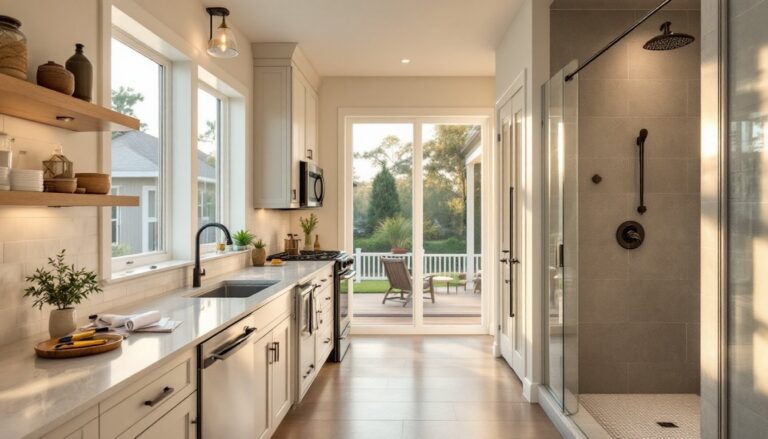
Current trends reflect practicality: open shelving paired with closed cabinetry for balance, waterfall edges on islands (both aesthetic and functional for seating), and quartz or sintered stone countertops that resist stains and heat better than laminate. Most Elmhurst contractors report that homeowners are moving away from all-white kitchens toward warm neutrals paired with accent cabinetry in deep blue, charcoal, or even matte black. Backsplash choices lean toward subway tile or larger-format options that look modern but feel timeless.
Appliance selection has shifted too. Stainless steel remains common, but matte black and integrated panel-ready appliances (where the cabinet face becomes the appliance face) are gaining ground. Induction cooktops, while pricier, offer safety, precision, and energy efficiency that gas can’t match.
Popular Kitchen Features & Modern Finishes
Layout and Flow: Most remodels maintain the traditional work triangle (sink, stove, refrigerator) but adapt it for modern entertaining. Island placement, counter depth (typically 24 to 25 inches in nominal measurements), and clear sightlines to adjacent living spaces are standard. Ensure electrical and plumbing rough-in happens before drywall: it’s far cheaper than retrofitting later.
Storage Solutions: Pull-out drawers, corner carousels, and vertical dividers for baking sheets or cutting boards are no longer nice-to-have. Homeowners expect pantry systems, whether freestanding or built-in shelving with labeled bins. Most kitchens need at least 150 to 160 linear feet of cabinet or shelving when you count upper and lower runs.
Lighting: A mix of overhead task lighting (under-cabinet LED strips or recessed ceiling fixtures rated for kitchen environments) plus ambient pendant lighting over the island or dining area is standard. Code requires at least one outlet every four feet along countertops: modern kitchens often have more. Dimmer switches for ambient lighting cost little but improve usability throughout the day.
Hardware and Finishes: Cabinet hardware in brushed brass, matte black, or stainless steel is enduring. Faucet styles range from traditional two-handle to touchless and pull-down sprayer models. A quality faucet (with a lifetime warranty and easy cartridge replacement) outperforms bargain models that wear out in five years.
Bathroom Renovations: Adding Value and Comfort
Bathroom remodels deliver strong value too, though they typically return 50–60% of project cost in resale value (compared to kitchens at 60–75%). The upside is that bathroom projects are often faster and less disruptive than kitchen overhauls. A thoughtful bath renovation also pays dividends in daily comfort, especially for aging homeowners or those with mobility concerns.
Elmhurst bathrooms range from tiny half-baths to sprawling master suites. The approach differs. A main bathroom might warrant a soaking tub, walk-in shower, double vanity, and heated flooring. A powder room might focus on style and storage in a compact footprint. Regardless of size, focus on ventilation (an exhaust fan rated for your bathroom’s square footage and ducted to the exterior, not the attic), waterproofing, and durable, low-maintenance finishes.
Trends in Elmhurst bathrooms reflect personal wellness: spa-like showers with body jets and rainfall showerheads, free-standing soaking tubs positioned as focal points, and heated towel racks. Cabinetry finishes mirror kitchen trends, warm whites, soft grays, and deeper tones. Tile choices lean toward large-format porcelain (12×24 inches or larger) on walls and matte or textured finishes on floors for slip resistance.
Essential Bathroom Upgrades Homeowners Choose
Shower and Tub Selections: Frameless glass enclosures look expansive but require careful waterproofing and regular squeegee use to prevent mineral buildup. Sliding barn doors or pivot frames are practical alternatives. Walk-in showers with curbless thresholds (or minimal curbs) suit both aesthetic preferences and accessibility. Ensure the shower valve is roughed in before walls close: changing it later means costly demolition.
Vanity and Storage: Floating vanities (mounted to studs, not resting on floor) make small bathrooms feel larger and simplify cleaning. Standard vanity depth is 21 inches: counter height is 30–36 inches (code allows flexibility). Double vanities in master baths are now standard if space permits. Plan for medication cabinets, open shelving, or deep drawers, bathroom clutter is real, and storage solves it.
Fixtures and Finishes: Water-efficient toilets (1.28 GPF or less) save money long-term and often come with better flush performance than older models. Faucets in brushed nickel, matte black, or champagne bronze are durable and timeless. Heated bidet seats and towel warmers are popular additions that don’t require extensive rough-in work if installed in existing outlet locations.
Ventilation and Moisture Control: Undersized exhaust fans are the silent killer of bathroom longevity. A 5×8 foot bathroom needs a 50–100 CFM fan: a master bath might need 150+ CFM. Duct it to the exterior, not soffit overhangs or attic spaces, to prevent mold and moisture damage. Timer or humidity-sensor controls ensure proper operation without user guesswork.
Planning Your Elmhurst Remodeling Project: Budget and Timeline
Budget realism separates successful projects from frustrating overruns. Kitchen remodels in Elmhurst typically range from $40,000 to $100,000+ depending on scope (cosmetic facelift vs. full gut renovation), material quality, and whether structural or systems changes are needed. Bathroom remodels run $15,000 to $50,000 for similar reasons. A whole-home renovation, kitchen, primary bath, flooring, and systems upgrades, can easily exceed $150,000.
Understand the price drivers: labor accounts for 40–50% of total cost in skilled trades. Materials vary widely: a cabinet can cost $50 or $500 depending on construction and finish. Permits, inspections, and potential code corrections (like upgrading an electrical panel or replacing knob-and-tube wiring) add time and cost but are non-negotiable for safety and resale.
Timeline expectations: cosmetic bathroom updates take 3–6 weeks: full bathrooms run 6–12 weeks. Kitchens typically need 8–16 weeks for design, ordering, installation, and punch-list work. Delays happen, material backorders, hidden structural issues, or permit holdup. Add 2–3 weeks to your estimate as a buffer.
Budget planning tools, like those offered on HomeAdvisor’s cost estimator, help homeowners understand regional pricing and benchmark contractor bids. Gather 3–5 estimates before committing. Compare scope carefully: the lowest bid often reflects cut corners, not efficiency. Document exactly what’s included: how many coats of paint, trim options, disposal fees, and cleanup expectations vary widely.
Selecting the Right Contractor for Your Renovation
A skilled contractor makes the difference between a project that runs smoothly and one that drains your savings and patience. In Elmhurst, verify licensing (Illinois requires contractors to be licensed for projects over $1,000), insurance (general liability and workers’ compensation are non-negotiable), and bonding. Ask for references and actually call them, ask about timeline adherence, workmanship, cleanliness, and how change orders were handled.
Check online reviews on Angi’s contractor ratings and the Better Business Bureau, but weigh them thoughtfully. Disgruntled customers are vocal: satisfied customers often don’t post. Red flags include reluctance to provide written estimates, pressure for large upfront payments (never pay more than 25–33% down), or vague scope descriptions.
The right contractor understands Elmhurst’s housing stock, local building code requirements, and can adapt designs to your home’s existing systems. They communicate regularly, respect your home, contain dust with barriers and HEPA filtration if needed, and provide a detailed contract with a payment schedule tied to project milestones (e.g., 25% at commencement, 25% at rough-in, 25% at trim, 25% at completion).
Don’t hire solely based on price. A contractor who loses money on your job may cut corners or disappear mid-project. A contractor charging premium rates should deliver premium results and professional behavior. And remember: permits exist for your protection. If a contractor suggests skipping them, keep looking. This Old House’s contractor guide outlines vetting practices that stand the test of time.