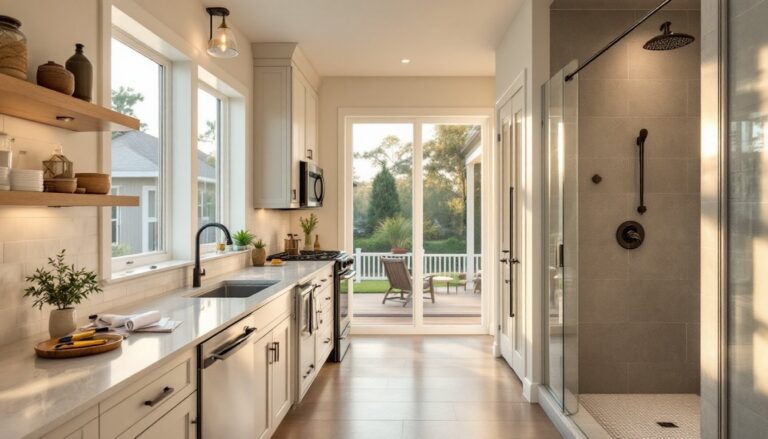
Louisville’s housing market is booming, and homeowners are capitalizing on the opportunity to upgrade their properties. Whether it’s a fresh kitchen, an expanded bathroom, or a backyard oasis, home remodeling projects have become a smart investment in Kentucky’s largest city. With new construction pricing at a premium and existing home inventory tightening, many homeowners choose to stay put and improve what they own. This guide walks you through what’s trending in Louisville remodeling, how to find a qualified contractor, budget wisely, and navigate the local permitting process to bring your vision to life.
Table of Contents
ToggleKey Takeaways
- Home remodeling in Louisville, KY offers homeowners strong ROI (50–70% recovery on kitchens and bathrooms) while allowing them to stay in neighborhoods they love without facing competitive inventory and moving costs.
- Kitchen and bathroom renovations are the top priorities for Louisville homeowners, with kitchens averaging $50,000–$100,000 and full bathroom remodels reaching $30,000+, focusing on durable materials like quartz countertops and spa-like features.
- Finding a qualified Louisville contractor is critical—verify their Kentucky license, check recent references, review written bids from at least three contractors, and avoid those demanding large upfront payments.
- Energy efficiency and open-concept living with designated quiet zones are trending in Louisville remodeling, alongside natural hardwoods and functional design that prioritizes storage and layout over pure aesthetics.
- Budget 10–20% contingency for unexpected costs, understand local permitting requirements through Metro Louisville Department of Inspections, Permits & Licenses, and phase work strategically to prioritize high-impact upgrades that enhance resale value.
- Outdoor living spaces, including composite decks, paver patios, and hardscaped features, are increasingly popular in Louisville thanks to the region’s mild summers and strong outdoor culture.
Why Louisville Homeowners Are Investing in Remodeling Projects
Louisville homeowners have solid financial reasons to remodel. Upgrading kitchens and bathrooms typically recoup 50–70% of project costs at resale, while outdoor additions can push that figure higher in a market where outdoor entertaining matters. Beyond ROI, many homeowners remodel to stay in neighborhoods they love, near schools, jobs, or established communities, rather than facing closing costs and moving expenses.
The city’s strong real estate appreciation over the past five years has built equity that homeowners can leverage. Plus, aging housing stock means many Louisville homes benefit from modernized systems: updated HVAC, electrical capacity for modern appliances, and current plumbing standards. Staying in place also beats the hassle of hunting for inventory in a competitive market. For families, remodeling to add space, a primary suite addition, finished basement, or home office, often costs less than buying a larger house nearby.
Popular Remodeling Trends in Louisville
Louisville remodeling trends reflect both regional preferences and national patterns. Open-concept living remains popular, knocking down non-load-bearing walls between kitchen and dining areas, but homeowners are balancing this with designated quiet zones and home offices. Energy efficiency is now table stakes: new insulation, high-performance windows, and heat pump HVAC systems appeal to budget-conscious buyers and reduce long-term utility costs.
Natural materials, especially hardwoods (oak, hickory, walnut) sourced locally or regionally, resonate with Louisville clients. Neutral color palettes dominate, soft grays, warm whites, and earthy tones, paired with statement lighting and quality hardware. Functionality-first design is winning over pure aesthetics: hidden storage, pull-out pantries, and modular bathrooms reflect how people actually live.
Kitchen and Bathroom Renovations
Kitchens remain the top remodeling priority, with average full-scale projects (cabinetry, counters, appliances, flooring, and lighting) running $50,000–$100,000 for mid-range finishes in the Louisville area. Homeowners often prioritize durable countertops, quartz and porcelain over laminate, because they hold up to daily use and command buyer attention. Island additions with seating, open shelving mixed with closed cabinetry, and oversized sinks are standard requests. Lighting layers, task, ambient, and accent, are non-negotiable.
Bathroom remodels vary wildly by scope: a cosmetic refresh (vanity, fixtures, tile, paint) might cost $8,000–$15,000, while a full gut renovation (layout change, waterproofing, tile work, mechanical upgrades) can hit $30,000+. Walk-in showers with frameless glass enclosures, freestanding soaking tubs, and spa-like ventilation are common upsells. Heated tile floors and radiant barriers appeal to Louisville’s cold winters. Dual vanities or “his-and-hers” layouts are popular in master baths. Don’t skimp on ventilation: improper exhaust fans lead to mold and premature finish failure in humid climates.
Outdoor Living Spaces
Louisville’s mild summers and strong outdoor culture fuel interest in patios, decks, and backyard structures. Composite decking (Trex, Timbertech, Azek) has become standard, less maintenance than wood, though with a higher upfront cost. Pressure-treated lumber remains budget-friendly for permanent structures if properly sealed annually. Paver patios, especially with permeable bases for drainage, handle Louisville’s rainfall better than poured concrete, which can crack under freeze-thaw cycles.
Fire pits, outdoor kitchens with built-in grills and refrigeration, and shade structures (pergolas, shade sails, retractable awnings) transform backyards into gathering spots. Pool additions are less common in Louisville than in warmer regions, but those who invest often pair them with spa features and automated systems. Hardscape planning must account for slope, drainage, and utility lines: hire a landscape engineer if the project crosses property lines or involves significant grading.
Finding the Right Contractor in Louisville
Choosing a contractor is the single most important decision in a remodel. A great contractor salvages a mediocre plan: a poor one ruins a solid budget. Start by asking neighbors, friends, and real estate agents for referrals, word-of-mouth in Louisville’s close-knit community carries weight. Check online reviews on HomeAdvisor and Angi, but read carefully: one five-star review from a happy customer matters more than aggregate star ratings.
Verify licensing: Kentucky requires general contractors to be licensed. Ask for their license number and confirm it with the Kentucky State Board of Contractors. Request at least three references, people who’ve used them within the past two years on projects similar in scope to yours. Call them. A good contractor also carries liability insurance and workers’ comp: ask to see current certificates.
Get written bids from at least three contractors. A bid should detail materials, labor, timeline, payment schedule, and warranty. Suspiciously low bids often signal corner-cutting or inexperience. The middle bid is usually the sweet spot. Avoid contractors who demand large upfront payments: progress payments tied to completed milestones (30% down, 30% at framing, 30% at rough-in, 10% on final inspection) protect both parties. Meet your contractor in person: you’ll spend months working with them. Chemistry and communication matter.
Budgeting and Planning Your Louisville Remodel
Realistic budgeting prevents stress and scope creep. Start by defining your project scope: are you doing cosmetic updates (paint, fixtures, flooring) or structural work (walls, mechanical systems, foundations)? Cosmetic work scales down affordably: structural work doesn’t.
Use cost estimators like ImproveNet to get ballpark figures, but remember they’re national averages. Louisville’s labor costs run slightly below national average, but materials (lumber, appliances, tile) fluctuate with global supply. Get detailed quotes from three contractors: they’ll account for local pricing better than any online tool. Add 10–20% contingency for unknowns, hidden plumbing, asbestos, structural rot. Remodels almost always uncover something unexpected.
Pay attention to timeline. A kitchen remodel typically takes 6–12 weeks: a full-home renovation can stretch to 6+ months. Longer projects mean extended disruption, inflation adjustments, and financing costs. If you’re financing, understand your loan options: personal loans, home equity lines of credit (HELOCs), and FHA 203(k) loans all have different rates and terms. Work with a lender early to lock in rates and timelines.
Phase your work strategically. If budget is tight, prioritize high-impact, resale-friendly upgrades first: kitchen, master bath, flooring. Secondary projects (powder room refresh, basement finishing) can wait. Don’t spread money so thin that every room gets a half-baked update: one showpiece room outperforms five mediocre ones.
Local Permits and Regulations for Home Remodeling
Louisville and Jefferson County mandate permits for most structural, electrical, plumbing, and mechanical work. Cosmetic updates, new paint, tile backsplash, light fixture swaps on existing circuits, often don’t require permits, but it’s wise to ask. Electrical: any work beyond replacing fixtures typically needs a permit. Plumbing: new fixtures, drain relocation, water line work all require permits. HVAC: equipment replacement and ductwork changes must be permitted. Structural: any wall removal, beam installation, or load-bearing modification absolutely requires a permit and often engineer review.
The Metro Louisville Department of Inspections, Permits & Licenses (MDIPL) handles residential permitting. Pulling permits costs $50–$200 depending on project value, but skipping them invites fines, failed future inspections, and complications at resale. Permits also trigger mandatory inspections at key stages: framing, rough-in (electrical, plumbing, HVAC), and final. These protect you and ensure work meets current code.
Building codes in Louisville follow the International Residential Code (IRC), with some local amendments. Egress windows in bedrooms below grade, minimum ventilation for bathrooms, load-bearing calculations for beam sizing, these aren’t contractor whims: they’re safety standards. If you’re load-bearing a wall, the contractor must size the header (the beam that spans the opening) based on span and roof/floor loads above. Don’t assume your contractor knows code: confirm it during bidding.
Historic districts have additional overlay rules: if you’re in the Highlands, Butchertown, or another protected neighborhood, expect design review. Work with your contractor to understand local requirements upfront, it prevents expensive mid-project changes.