Cleveland homeowners are discovering that smart remodeling projects don’t just improve daily living, they increase property value and adapt homes to the region’s unique climate challenges. Whether you’re planning a kitchen overhaul, upgrading insulation for brutal winters, or refreshing a bathroom, home remodeling in Cleveland requires understanding local contractor networks, permit requirements, and the specific durability standards that Midwest properties demand. This guide walks you through the essentials, from identifying trends that resonate in Northeast Ohio to financing your project and navigating the city’s building codes. You’ll learn how to partner with reliable contractors, budget realistically, and avoid common pitfalls that derail renovations. Ready to transform your Cleveland home? Let’s start with what’s driving the remodeling surge in your neighborhood.
Table of Contents
ToggleKey Takeaways
- Home remodeling in Cleveland addresses genuine durability and energy efficiency needs driven by the region’s harsh winters, making renovations practical investments beyond aesthetic updates.
- Popular Cleveland remodeling trends focus on moisture control in bathrooms, energy-efficient heating systems, and insulation upgrades that deliver 10–20% heating bill reductions, reflecting Midwest climate demands.
- Finding the right contractor requires verifying Ohio licensing, getting three written quotes with detailed scope, checking references, and avoiding suspiciously low bids that often signal corner-cutting.
- A mid-range kitchen remodel in Cleveland typically costs $35K–$55K and recovers 60–80% at resale, while budgeting 10–15% contingency protects against common issues like hidden water damage or outdated wiring in older homes.
- Cleveland’s permit requirements for kitchens, bathrooms, and HVAC work are non-negotiable; skipping permits voids insurance, fails home inspections, and exposes you to fines—licensed contractors will ensure compliance.
Why Cleveland Homeowners Are Embracing Remodeling Projects
Cleveland’s housing stock reflects a rich architectural heritage, lots of solid brick colonials, bungalows, and 1970s ranches that have good bones but outdated systems. Remodeling makes sense here because many homes were built before modern energy efficiency standards, insulation science, and plumbing/electrical codes. A kitchen or bathroom update in a 60-year-old Cleveland home isn’t just aesthetic: it’s correcting systems that waste energy and money every winter.
Regional economic factors matter too. Unlike hot markets where homes flip quickly, Cleveland offers homeowners breathing room to invest incrementally in their properties. Neighborhoods like Ohio City, Tremont, and University Heights have seen renewed interest, encouraging long-term residents to modernize rather than relocate. Also, the Midwest’s four-season weather means winter-related wear on roofs, foundations, and HVAC systems drives genuine remodeling necessity, not just trend chasing. Homeowners aren’t just refreshing finishes: they’re addressing real durability and thermal performance issues that every Cleveland winter exposes.
Popular Remodeling Trends In Cleveland
Kitchen And Bathroom Upgrades
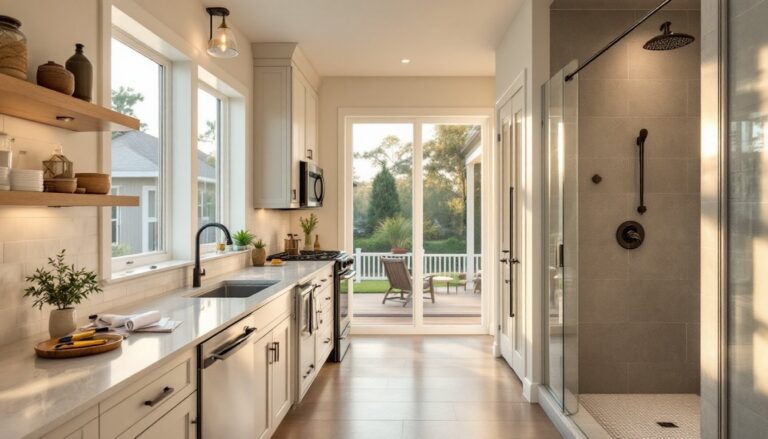
Kitchen remodels lead the pack in Cleveland, with homeowners prioritizing functional layouts over trendy finishes. Open-concept kitchens remain popular, but locals are being smarter about it, preserving at least one wall for appliances and cabinetry to keep cooking aromas contained. Quartz countertops have largely replaced granite because they’re non-porous, easier to maintain in a dusty climate, and hold up better under rapid temperature swings. Stainless steel appliances remain standard, though many contractors note that slate or matte finishes hide fingerprints better than polished chrome in family homes.
Bathroom upgrades focus on moisture control and longevity. Walk-in showers with proper waterproofing membranes and sloped floors prevent the mold issues that plague older Cleveland homes with poor ventilation. Heated floor mats, exhaust fans with humidity sensors, and proper insulation around exterior walls reduce condensation problems. Vanities now include under-sink storage with moisture-resistant cabinetry rather than exposed pipes. These aren’t Instagram-moment upgrades, they’re practical responses to Cleveland’s damp climate.
Energy-Efficient Improvements For Midwest Winters
This is where Cleveland remodeling diverges sharply from sunbelt markets. High-efficiency boilers, heat pumps, and radiant heating systems are more common than in most regions because homeowners calculate payback periods over 15–20 years of heating season. Upgrading insulation in attics and walls from R-15 to R-38 or R-49 (depending on retrofit feasibility) directly reduces heating costs. Fiberglass batts or blown cellulose both work, but blown-in cellulose fills cavities more completely and resists settling in older homes.
Windows are another priority. Replacing single-pane originals with Low-E argon-filled double-pane units reduces heat loss significantly. Homeowners report heating bill reductions of 10–20% after comprehensive window replacement, which justifies the $400–$800 per window installation cost in the Cleveland market.
Attic and basement air sealing is unglamorous but essential. Sealing rim joists, pipe penetrations, and electrical rough-ins with spray foam or caulk stops cold air bypass that no amount of insulation fixes. Many Cleveland contractors bundle this with attic insulation upgrades as a package: standalone air sealing might cost $800–$1,500 but pays for itself within 3–5 heating seasons.
Finding The Right Contractor In Cleveland
Cleveland has a robust network of licensed contractors, but quality varies widely. Start by asking neighbors and local Facebook groups for referrals, word-of-mouth in tight-knit neighborhoods is gold. Verify licensing through Ohio’s Division of Industrial Compliance or the Cuyahoga County Building & Trades Directory. A licensed contractor has completed apprenticeships and passed exams: that credential actually matters.
Get three written quotes, not verbal estimates. A reputable contractor will visit your home, measure carefully, and outline scope, timeline, and payment schedule in writing. Vague quotes (e.g., “kitchen remodel $25K–$35K”) are red flags: legitimate contractors specify what’s included, cabinets, countertops, flooring, labor, and what isn’t.
Check references seriously. Call past clients, ask about timeline adherence, unexpected costs, and cleanup. Look at their recent work in Cleveland if possible: a contractor experienced with your home’s era (whether it’s a 1950s ranch or Victorian) understands quirks you’ll encounter during demolition.
Don’t default to the lowest bid. A contractor 20% below market pricing is often cutting corners on material quality or labor. Mid-range bids from licensed contractors with good references are typically the safest choice. Also confirm they carry liability insurance and workers’ compensation: if someone gets injured on your property, you’re liable if they’re uninsured.
Online platforms like HomeAdvisor and Angi help compare contractors and read reviews, though always cross-reference with local licensing databases.
Budgeting And Financing Your Cleveland Remodel
Cleveland remodeling costs are below national averages, but that doesn’t mean you should skimp on quality materials in high-traffic areas. A mid-range kitchen remodel (new cabinets, counters, flooring, appliances) typically runs $35K–$55K: a full bathroom with tile, fixtures, and ventilation upgrades costs $12K–$25K. These are rough ranges: your costs depend on existing damage, whether you’re moving plumbing/electrical, and material choices.
Start by defining your budget ceiling and prioritizing. Can’t afford new hardwood throughout? Do main living areas and high-traffic hallways first. Master bathroom not urgent? Defer it and focus on the kitchen where you’ll recoup 60–80% of costs at resale.
Financing options include home equity lines of credit (HELOC), home equity loans, and FHA 203(k) loans if you’re purchasing. HELOCs typically offer the lowest rates (prime + 0–2% currently) but have variable interest: fix the rate if you’re concerned about rate hikes. Home equity loans carry fixed rates and are predictable but slightly higher than HELOC floors. For major renovations, ImproveNet offers cost guides and financing calculators tailored to your project scope.
Set aside 10–15% contingency for unexpected costs, water damage behind walls, outdated wiring that needs replacement, or structural issues are common in older Cleveland homes. A contractor finding hidden mold or termite damage halfway through isn’t their fault: it’s your home’s history revealing itself. Budget flexibility prevents project delays and financial stress.
Navigating Cleveland Permits And Local Regulations
Cleveland’s building permit process is straightforward compared to many cities, but it’s non-negotiable for major remodeling. Kitchen and bathroom remodels, electrical work, HVAC replacements, and structural changes all require permits. Cosmetic work, painting, drywall finishing, flooring in some cases, may not, but ask your contractor before assuming.
Permits involve submitting plans (often just photos and written scope for smaller projects), paying fees based on estimated cost, and scheduling inspections at key stages: rough-in (framing, electrical, plumbing exposed), and final (systems functional, finishes complete). The City of Cleveland’s Department of Building and Housing processes residential permits: typical turnaround is 5–10 business days for standard remodels.
Inspectors check compliance with the International Residential Code (IRC) and National Electrical Code (NEC). Some Ohio-specific items to know: bathrooms require exhaust fans ducted to exterior (not attics), kitchens need GFCI protection on countertop outlets, and electrical panels must be in accessible locations. Most contractors know these, but it’s your responsibility to ensure work is compliant.
Cleveland historical districts (Ohio City, Tremont, parts of University Heights) have overlay requirements: exterior changes may need Historic Preservation Commission approval. Interior work is usually exempt, but confirm with the city before starting.
Skipping permits invites problems: unpermitted work voids insurance coverage if damage occurs, fails home inspections at resale, and exposes you to fines if discovered. Licensed contractors push for permits because they know it’s the legal path: if a contractor suggests avoiding permits, find another one.